This bread has become an essential core component of our lives, with Steve eating it literally every day for breakfast, and me joining him on the weekend.
Steve now routinely makes two loaves at once, so this recipe is a double batch, which is spread across two tins.
We have now started buying our wholemeal flour from the Indian supermarket. It seemed to be more "real" than the wholemeal flour we got from the regular supermarket, which often looked like white flour with bran added back. The Indian flour is finer, so Steve finds he usually needs to add just a splash more water when he uses it. His advice is to note the texture of the mix. It should move freely, and if your flour is more "thirsty" like the Indian flour, then add just a splash of water to free the dough up. As with all bread making, this may take a little practice to have a feel for, but don't worry. This bread is super easy to get right.
If you are only wanting to bake one loaf of bread, then you would be best to use the OG recipe for this bread - find it here.
About half an hour (or longer) before you want to start making the bread, add the freekah/bulghur wheat/cracked wheat to a heatproof bowl. Pour over about two cups of boiling water and set aside. The wheat will expand and soften.
When ready to start making the bread, add the boiling water to a large heat proof bowl. Add the maple syrup and stir to integrate. Then add the cold water and stir again.
Add the yeast, and stir again. Set the bowl to one side for 12 minutes to allow the yeast to bloom.
Meanwhile, preheat the oven to 60 C (Conventional bake), making sure the shelf is in the middle of the oven.
Measure the dry ingredients into a separate bowl. This will be the main mixing bowl, so make sure it is a large bowl.
Line two loaf tins with non stick baking paper. Make sure the paper comes up above the sides of the tin, as this will make it easier to remove the bread after cooking. See note below for loaf tin size.
Before the 12 minutes is up (after adding the yeast to the water), tip the soaked freekah/bulghur wheat/cracked wheat into a sieve to drain the water.
When the 12 minutes is up, the yeast will have bloomed and will look foamy. Add this mixture to the dry ingredients along with the freekah/bulghur wheat/cracked wheat. Gently stir until well combined.
Tip the mixture into the lined loaf tins, ensuring that each tin has an even amount of mixture. Spread it out so that the top is level. Use a knife to make diagonal "slice marks" in the top surface of the bread, if desired.
Place the loaves into the middle of the oven, and bake for 20 minutes. This is the time when the bread gently rises.
At the end of the 20 minute rising period, turn the oven to 215 C and cook for a further 35 minutes. DO NOT open the oven door.
At the end of 35 minutes cooking time, remove the loaves from the oven. Remove each loaf from its tin and allow it to cool on a wire rack (so that it doesn't sweat, and get wet).
This is reasonably dense, Vogel's like bread. So, we find that it stores best it in the fridge, then slice and use it for toast most days.
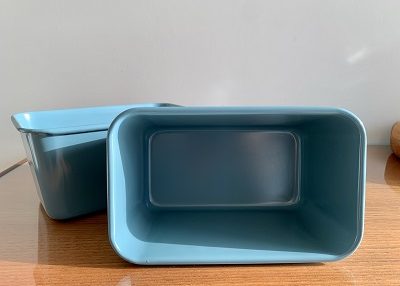
LOAF TINS
Many loaf tins seem to be sized for cake loaves rather than bread loaves, and have shallow sides. This bread is not kneaded, and when it rises, it takes the shape of the tin it is in. When I first made this bread it rose above the sides of the tins I had, and spread out, so that it had a "muffin top" shape. This is okay, but I wanted a more square slice. I spent some time researching tins, and the ones I have ended up with are Jamie Oliver brand. They come in two sizes, and I got the larger size (21 x 13 x 10.5cm). They started off being non-stick, but lost their non-stickiness very quickly. They need to have a full lining to prevent the bread from sticking to the sides.
SALT
Depending on where you are at with your taste buds and salt, you may not yet be ready to ditch salt from your bread altogether. We enjoy the taste of this bread without salt, but we have also been reducing salt over a long period of time, and our taste buds are more used to the natural taste of food. If you still want to have salt in your bread, just add 1 tsp of salt to the dry ingredients.
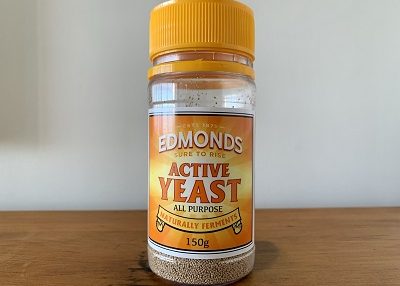
YEAST
There seems to be so many types of yeast around, and for a non-baker like me, this can seem daunting. I have made this recipe using Edmonds Active Yeast. It is readily available at the supermarket, and you store it in the fridge once opened. I have found it to work reliably in this recipe.


Leave a Reply